Life, and professional life too, occasionally takes interesting turns. Over 20 years ago, a door opened and launched me on a career in IT. I turned my back on my field of research and focused from then on on bits and bytes instead of amino acids and gene sequences. What followed was an amazing time of disruptive technological change. I was able to witness the triumph of virtualization from the very beginning and was a VMware fan from the beginning. I still remember very clearly the first migration of a VM with vMotion. It was a kind of magic and would fascinate me for the next 20 years.
Over the past year, profound changes in the world as we know it have once again become apparent. We are once again witnessing a radical transformation in the world of data centers. The market and technology leader of the last two decades is strategically realigning itself and the cards are being reshuffled. Many customers are no longer willing to go down this new path, or simply cannot afford to do so. I’m not talking about small customers here, but about upper mid-sized companies with up to 100 hosts and several thousand VMs. It’s time to recognize the iceberg on the horizon and make another course correction.
After two decades of intensive work as a freelance IT consultant, virtualization architect, and passionate trainer, I am starting a new chapter. In January 2026, I will take up a position at the Center for Organismal Studies (COS) at Heidelberg University—marking a return to my scientific roots.
A review
Over a period of more than 20 years, I have built up my expertise in the field of IT infrastructure and VMware virtualization and, as a freelancer, have supported numerous companies in setting up and modernizing their data centers, implementing cloud strategies, and operating hybrid environments.
VMware vExpert

The vExpert program not only opened the door to one of the friendliest global IT communities, but also boosted my reach and networking opportunities. For a long time, I considered my blog to be rather insignificant. It was only the encouragement of others that prompted me to join the program. Since my first application in 2017, I have been awarded the vExpert designation nine times in a row in several disciplines.
vExpertPro
The vExpert Pro initiative was launched to pave the way for new talents to join the vExpert community. Like me before, many potential candidates lacked external encouragement. A vExpert Pro is a mentor who prepares interested parties for their application and helps them maintain their status.
VMware Certified Instructor (VCI)
It is not only my passion to discover new things, but also to pass on the knowledge I have gained. That is why I have been a certified VMware trainer since 2018. It is a passion that I have pursued with particular joy. Being a trainer also meant always having to (and being allowed to) deal with the latest technologies. I considered it a privilege to come into contact with technological innovations very early on and (after an agreed embargo period) to write about them.
VMUG Germany

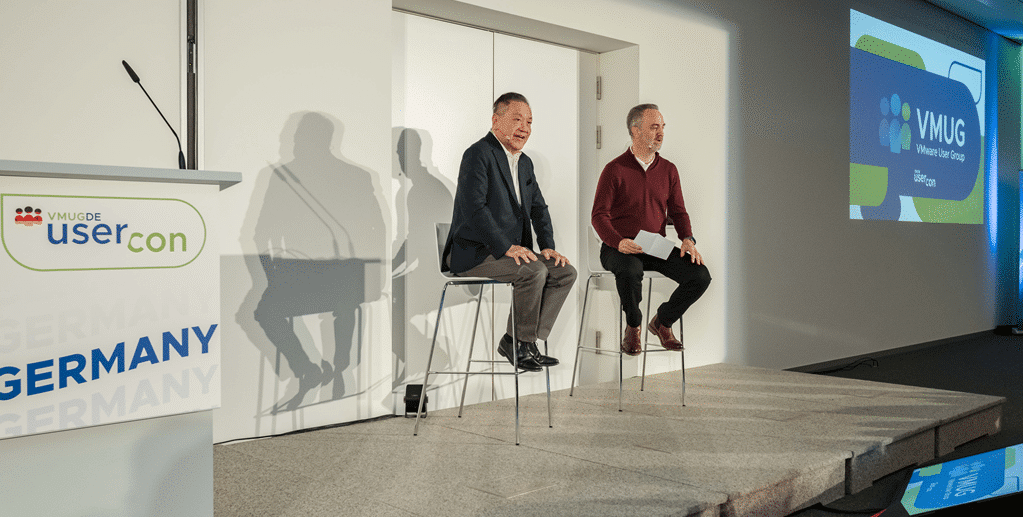
The VMware User Group (VMUG) is a community of VMware customers and users for direct exchange of experiences.
Together with my two fellow leaders Markus Gehm and Jens Klasen, I head up the VMUG group in Kaiserslautern and organize regular vCommunity meetings there. Regardless of my move, this will not change in the foreseeable future.
Continue reading “After 20 years, I am returning to my roots.”